Monday, December 30, 2013

Photo Gallery II: Vote for your favorite photo

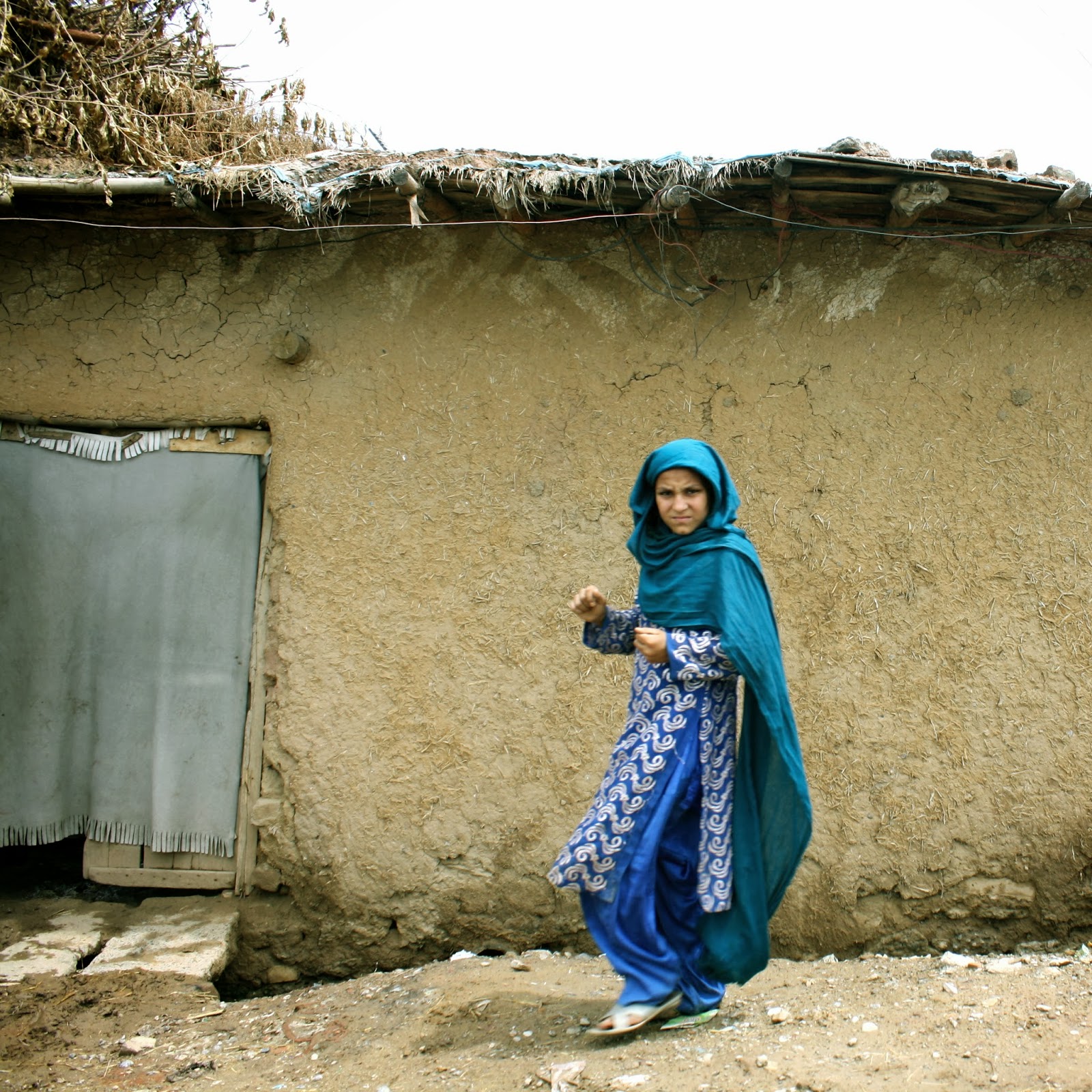
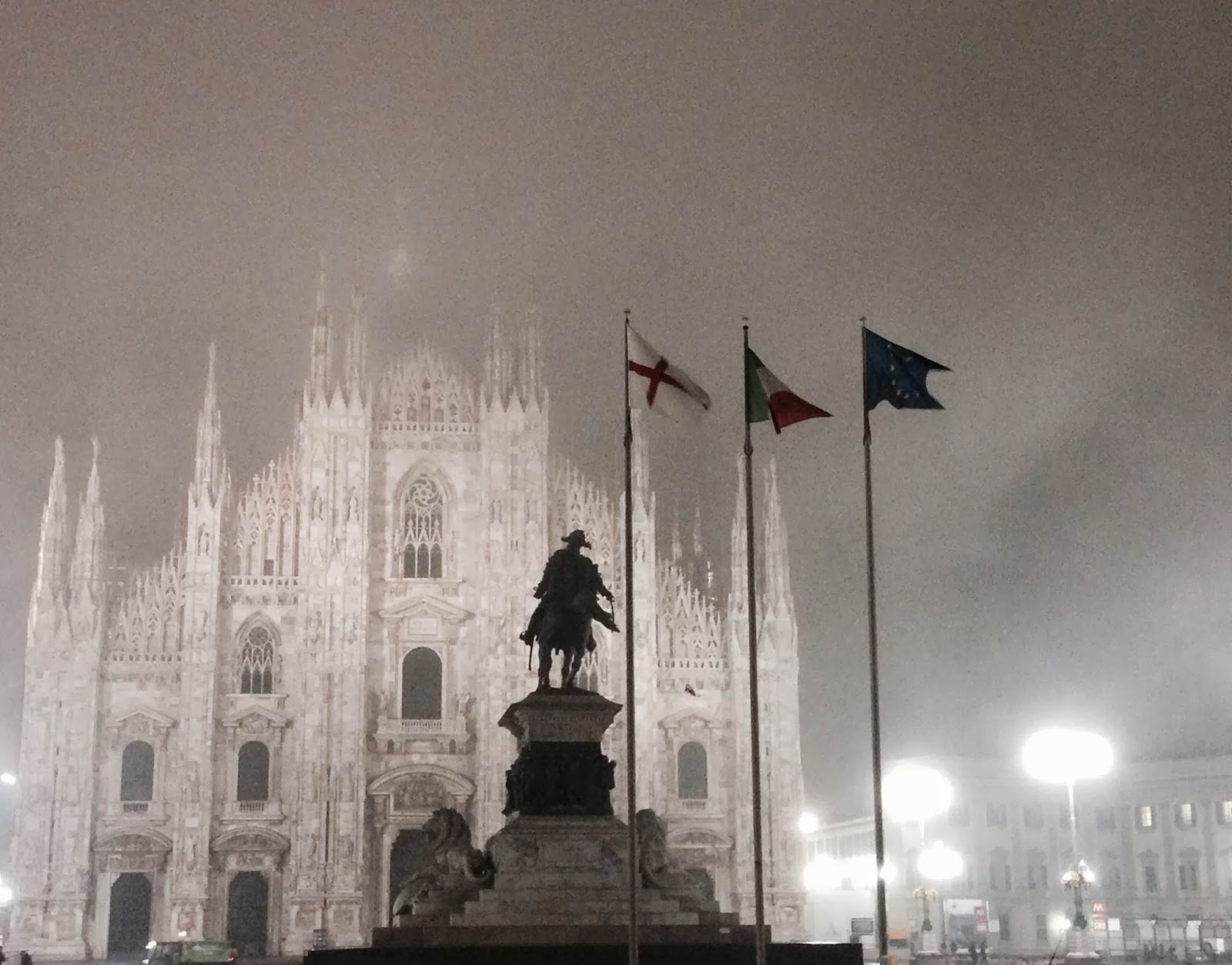
On December 19 we ran a first batch of 10 photographs by current SAIS Europe students and recent graduates. Today we publish another 10. Now is your chance to vote for your favorite from among the 20 photos. The winner will receive a Bologna Center tee shirt plus a book of their choice from among five written by SAIS Europe professors. Not to mention the honor of being singled out from among 20 outstanding shots.

To cast your anonymous vote, click here. (Before voting, don't forget to view the photos posted on December 19.) The poll will remain open until January 10.

Many thanks again to those who took the trouble to share their photographs with us.

Maxwell Cohen
Turin, Italy

Melanie Wheeler
Bologna, Italy

Nameerah Hameed
Islamabad, Pakistan


Nathan Shepura
Saharan Desert, Morocco

Nicola Hil
Railay, Thailand

Rebecca de Guttry
Galapagos Islands, Ecuador

Shelley Ranii
El Parque Nacional de los Glacieres, Argentina

Tess Johnson
Sardinia, Italy


Zhaoyin Feng
Shenandoah Park, Virginia

Zhiyi Chen
Zanzibar Island, Tanzania


Tuesday, December 24, 2013

Some tips ahead of the January 7 application deadline

As the January 7 deadline for applications draws near, below are some tips for putting the finishing touches on admissions dossiers for the 2014-15 academic year.

(Before the tips, don't forget to vote for your favorite photo from among those in our end-of-year galleries. We posted 10 photos last week and will publish another 10 on December 30, along with a link to the poll for voting.)

For posts on topics that are particularly popular at this time of year:
- statement of purpose
- analytical essay
letters of recommendation
Some questions we're hearing a lot these days:

Q: Can I email you my undergraduate transcript?
A: No. Transcripts should be mailed or couriered to:
SAIS Admissions
1740 Massachusetts Ave, NW
Washington, DC 20036
USA
This holds for those applying to start in Bologna or DC. Transcripts will be uploaded into candidates' online applications once they arrive.

Each transcript should be in a sealed envelope. It is easiest for the applicant to have one's university, which is quite accustomed to these things, send the transcript directly to SAIS. Alternatively, the candidate can send the transcript to the above address, but it should be in an unopened envelope.

Q: Can I upload my transcript myself to my application?
A: No. Please follow the directions above.

Q: Should I send you all of my transcripts, including work during an exchange program and in a master's program?
A: We need transcripts for all of your university-level work; if you have not yet finished your undergraduate studies, have your most recent transcript sent to us. The Admissions Committee wants to have as clear an idea as possible of your academic background and preparation.

Q: How should my referees submit their letters of recommendation?
A: As explained in the application instructions, referees can submit their recommendations in one of two ways.
  1. By uploading their signed letter, written on official letterhead, directly to the candidate's application;
  2. By sending a signed copy directly to SAIS Admissions at the above address in Washington, DC.
Q: Can I mail you my letters of recommendation?
A: You can mail them to SAIS Admissions in Washington provided they are in sealed envelopes. Remember, letters of recommendation are confidential.

Q: Can I email you my standardized test scores?
A: You should have the scores sent directly to SAIS via the code that is in the application instructions.

Q: What if I am unable to submit all elements of my application by January 7?
A: In that case, please send an email to sais.eu.admissions@jhu.edu explaining what is missing, why and when we can expect to receive it.

Q: Will you be telling me if my application is complete?
A: We will be checking applications after January 7 to see if they are complete. If something is missing from your application, we will get in touch with you. If you have submitted an application and do not hear from us, you can assume your application is complete.

Q: When will we hear about our interview?
A: All non-U.S. applicants who apply to start in Bologna and some non-U.S. citizens who are open to starting at either campus will be interviewed by a member of the Bologna Admissions Committee. Applicants will be notified in the second half of January. Please keep in mind that while Admissions Committee members do conduct fact-to-face interviews in some cities, mostly in Europe, most interviews are done over the telephone or via Skype. There is no advantage one way or the other.

Nelson Graves


Thursday, December 19, 2013

Photo Gallery I: A feast for your eyes

We can't think of a better way to end the year than to showcase photographs submitted by our students and recent graduates. Today we post 10 photos; on December 30 we will post another 10. They underscore the contributors' talents and the global sweep of their travels and interests.

After we have posted all 20 photos, we will publish a link to an anonymous survey so that our readers can vote for their favorite photographs from among the 20. The winner of the contest will receive a Bologna Center tee shirt plus a book of their choice from among five written by SAIS Europe professors.

We will activate the survey when we post the next batch of photos on December 30. Thanks to those who took the trouble to share their photos with us.

Amar Causevic
Gorazde, Bosnia & Herzegovina

Booyoung Jang
Saharan desert, Morocco

Christopher Michael
St. Peter's Square, Vatican City

David Ehle
Bologna, Italy

Joe Geni
Caldera, outside Santa Fe, New Mexico

Johannes Gartner
Montmartre, Paris

Lauren Hartel
Greve, Italy


Marco Steecker
Milan, Italy


Markus Wilthaner
Sparafeld National Park
, Austria

Maximilian Meduna
Varanasi, India

Wednesday, December 18, 2013

Bridging photography and history

Judith Cohen is director of the photo archive at the U.S. Holocaust Memorial Museum. This month she delivered a lecture at SAIS Europe bridging photography and history: "Reimagining the Holocaust: Jewish Ghetto Photographers".

We all know the old adage, “seeing is believing,” but when studying photographs, particularly photographs of the Holocaust, how can we be sure that what we see and hence believe is in fact an accurate portrayal of reality?

The fact is that all photographs are double crops -- a photographer not only decides what to include in the frame of his photographs, cropping out everything else around him, but he or she also makes a crop in time. Every photograph captures a unique moment without a before or after and hence leaves out often important context which can better explain what is happening.

Salo Haar takes his son Roman sledding in the
Rzeszow ghetto, 1941; the father was killed one year later.
 U.S. Holocaust Memorial Museum
Courtesy of Roman Haar
If this is true of everyday photos, how much more true is it of photographs taken by members of the German Propaganda Companies (PK), commissioned for the purpose of documenting the Nazi world view.

The vast majority of surviving Holocaust photographs were taken by German photographers, and therefore often unknowingly we imagine the Holocaust through Nazi eyes. Yet there also exists a smaller and lesser known corpus of photographs taken by Jewish photographers which present a very different view of the Nazi ghettos.

These photographs preserve events the Nazis did not record to include everyday Jewish family life, resistance activities and certain atrocities; they depict both joy and anguish. Many of these photos appear at first glance fairly benign, such as a photo of a father and son going sledding. The extreme pathos lies in the extended caption which explains that the father was killed one year later.

For this reason, the United States Holocaust Memorial Museum is working not only to collect these private photographs but also the stories behind them. We engage in a rush against time to acquire as much information as possible while survivors are still alive so that we can preserve and present as complete a picture of the Holocaust as possible.

Judith Cohen

Tuesday, December 17, 2013

Shakespeare and politics from an unaccustomed vantage point

A popular seminar at SAIS Europe this autumn was based on four works by an Englishman born in the 16th century, writings that sit comfortably in a literature program. Prof. Eliot Cohen, head of SAIS' Strategic Studies concentration, taught the unusual addition to the Bologna Center's repertoire: "Shakespeare on War and Politics".

Q: How did you get the idea for your seminar, “Shakespeare on War and Politics”?
Cohen: I love Shakespeare and got the idea for beginning to do something like this after my wife and I saw "Henry VIII," which is not often performed. Cardinal Wolsey, who has just been fired by the King, gives a wonderful speech that begins “Farewell. A long farewell to all my greatness.” It struck me then, as now, that Shakespeare gives insights into dimensions of politics that are worth sharing with students. Believe me, there are plenty of Washington figures, including some whom I know personally, who would identify with Wolsey.

Prof. Eliot Cohen
Q: Why would a SAIS student want to devote time to this kind of extra-curricular series?
Cohen: Curiosity. Shakespeare's intoxicating language. A desire to see the world of politics from an unaccustomed vantage point.

Q: How did you choose the four works that were read as part of the series?
Cohen: The theme I wanted to explore was ambition and the dangerous consequences of yielding to it. "Macbeth" is perhaps the darkest of Shakespeare’s plays on that theme and a favorite of Abraham Lincoln’s. "Coriolanus" and "Julius Caesar" are probably the best of his Roman plays, with the former dealing with civil-military relations, among other things, and the latter the way in which different kinds of ambition overwhelm human beings who are neither foolish nor without attractive values. "Richard II" deals with what happens when an illegitimate but highly competent aspirant for power encounters someone who has a legitimate claim on power, but no idea how to use it wisely.

Q: What did you discover as you prepared your series of lectures?
Cohen: One reads much more carefully than on one’s own or when watching a play. I enjoyed most thinking through the questions I would use to get the students thinking, while simply savoring the language.

Q: Will you be using some of what you learned in this lecture series as part of your Strategic Studies courses at SAIS?
Cohen: Shakespeare has shown up in a number of my courses, but the main takeaway is the appeal of this material to students. So I suspect that a noncredit seminar on Shakespeare is going to be part of my teaching repertoire at SAIS for some time. We’re planning another set of plays for SAIS Washington this spring, in fact!

Q: What are the three main lessons for today’s policymakers from the works that were read for the series?
Cohen: That once you launch on a course of action that is violent or illegitimate, you cannot foretell the second and third order consequences that will come your way -- most of which will be bad. That political leaders often deceive themselves about their motives. That leadership which falls back on mere authority, rather than more durable forms of support and acquiescence, will fail. Are these new lessons? No. But are they portrayed more powerfully than anywhere else I know? Indubitably.

Thursday, December 12, 2013

Student life: Help for the Philippines in the "Bayanihan" spirit

With song, dance and a silent auction, the SAIS Europe community came together last week to raise funds for the victims of Typhoon Yolanda in the Philippines.

Supported by students, faculty and staff, we raised more than 1,000 euros for the Philippine Red Cross during a holiday happy hour planned by the Diplomacy Club, International Development Club and Global Securities and Conflict Management Club.

Hot ticket items at the auction included two seats at a poker night with SAIS Europe Director Kenneth Keller and Economics Prof. Michael Plummer; a coffee date with Prof. Filippo Taddei; two man servants for the day, and a ball gown (for the Austrian ball in February). Not to mention the squash racket, golf club, tea collection, art books and Venezuelan necklace.

Singing stars emerged from the shadows for the karaoke competition. The winning team of Shauna Aron and Nick Van Vliet rapped to the tune of Royals to describe the Bologna Center experience. Check out the video here.
The winning rappers

Late night studying, gotta get that paper done
Few drinks, up all night, end up at Soda Pops

We don’t care
Riding bicycles in the street

Cause everybody knows
Rush to SAIS, late to class
Caffè at Giulio’s
Hit the books, work to do
Lost a night of sleep or two
But, we don’t care
It’s the grind that’s why we’re here…

Thea Dickerman broke it down to Shoop by Salt-N-Pepper, while Kyle Cooke sang Mr. Bombastic by Shaggy. Star duos included Sirtaj Kaur and Jagabanta Ningthoujam, and Philipp Hlatky and Paul Stack. 
 
Why was the event hosted in "Bayanihan" spirit? "Bayanihan" is Filipino for "community", captured by the tradition of neighbors volunteering to relocate a family by carrying the family's house on their backs to a new location.

SAIS Europe wanted to do its part for the Philippines, in Bayanihan spirit.

Ingat po.

Shauna Aron and Ian Hamilton (BC14/DC15)
Photographs by Jag Ningthoujam (BC14/DC15)

Wednesday, December 11, 2013

Open Day at SAIS Europe: Questions and nervous excitement

Last week several dozen prospective applicants visited SAIS Europe during its annual Open Day. Irena Grizelj, an MA candidate concentrating in Conflict Management, housed a visitor and participated in a panel that tackled potential applicants' questions -- many of them asked the same queries Irena had when she first visited the Bologna Center.

Facing a sea of expectant faces, I was transported in my mind to the same room two years earlier.

I had sat where they were, full of questions, concerns and nervous excitement that I found hard to contain. It was Open Day at SAIS Europe, a chance for aspiring candidates like myself to see the Bologna Center up close and personal.

Then last week I was at the head table, facing potential applicants, telling them what to expect.
 
Open Day at SAIS Europe
As a member of this year's Student Government Association (SGA), I participated in a panel last Friday to answer Open Day visitors' questions – the same queries I had asked two years before.
What is student life like in Bologna? What did you do before SAIS? Should I have more work experience before SAIS? How do you find funding?
The similarity of thoughts and concerns was somehow reassuring. Everyone embarking on the application adventure faces the same uncertainties and concerns.

Irena Grizelj
To be honest, when I first visited SAIS Europe my expectations were not fully met. Although I had spoken to alumni and done my research, and I had a grand vision of SAIS that put the school as my top choice, the small Bologna campus did not sweep me off my feet during my first, brief stay.

But I had not had the chance to understand and explore the vast opportunities the program offers: exceptional and focused courses, experienced and approachable professors, countless interesting seminars on topics I would not have thought to explore, career trips, informational panels, social events. The list goes on.

My first semester is now almost over, and my experiences have surpassed my expectations.

We all know that SAIS students are diverse and do not fit into a single mold. But in speaking with some potential students during Open Day, I could not help but think: “You would be a great fit with SAIS.” Call it intuition.

Here are some words for all potential students: “Everything will work out the way it should. Work hard and you will end up where you want to go.” Reflecting on my own application, I’m confident those who are meant to be at SAIS will end up at SAIS.

And I look forward to meeting them.

Irena Grizelj (BC14/DC15)

StatCounter